Straight Coolant-Hole Rods

Straight Coolant-Hole Rods

Cemented Tungsten Carbide Rod Blanks for Cutting Tool Manufacturers

Cemented Tungsten Carbide Rod Blanks for Cutting Tool Manufacturers

KENIN supplies straight coolant-hole rods for cutting-tool manufacturers and industrial buyers sourcing cemented carbide blanks. This category brings together the configurations shown in the KENIN 2026 rod catalog. Product selection should be based on the actual blank geometry, supply condition, dimensional requirements and intended tool design.

Explore the product series below. Each detail page should be treated as the source for its own catalog dimensions and tolerance notes; values must not be transferred between product families.

Straight Coolant-Hole Rods Products

Product Selection: What to Compare

When comparing straight coolant-hole rods, start with the finished tool design and work backward to the blank specification. Confirm:

  • Nominal blank or ground outside diameter and its stated tolerance.
  • Overall rod length and applicable length tolerance.
  • Internal coolant-hole or external profile geometry, where applicable.
  • Surface and supply condition: sintered/unground, rough-ground or precision-ground, as identified for the product.
  • Chamfer, groove, slot, step or taper details shown on the drawing.
  • Required carbide grade and the intended workpiece/tool application.

Technical Specification Guidance

KENIN's 2026 catalog provides product-specific tables. The applicable fields depend on the configuration:

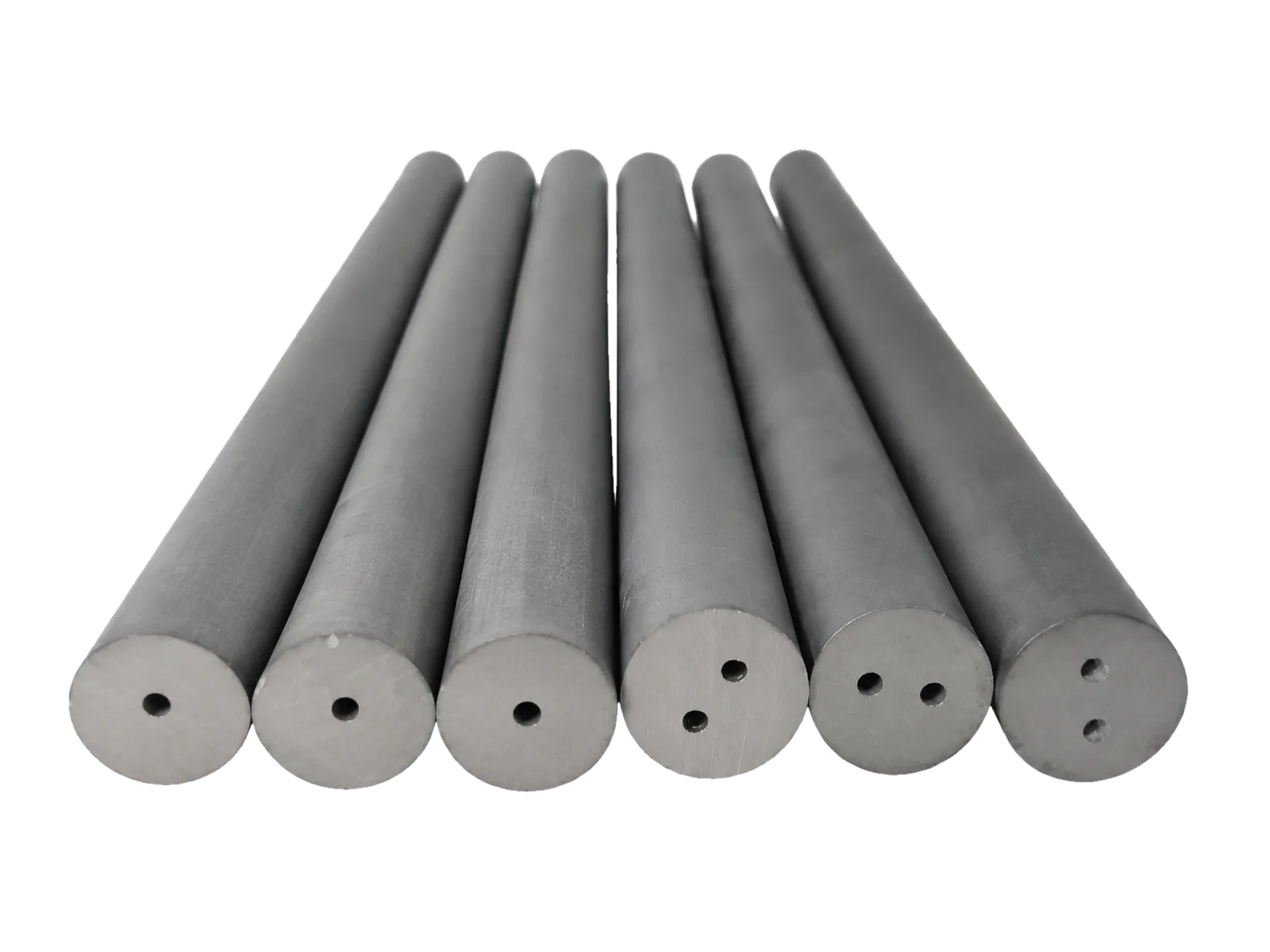
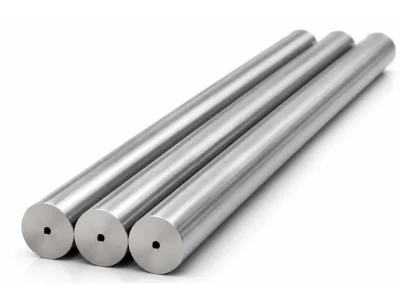
  • Single straight hole: blank D, D tolerance, L, hole diameter d, d tolerance and eccentricity/offset es.
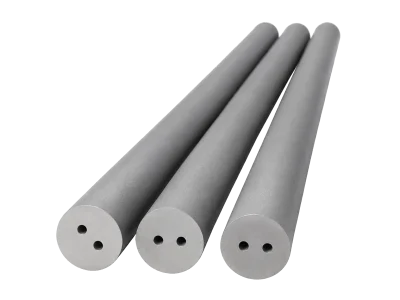
  • Twin straight holes: blank D, D tolerance, L, hole diameter d, d tolerance, TK, TK tolerance and eccentricity es.
  • Reduced-size twin holes: the same dimensional fields, using the dedicated reduced-hole table.

TK is the diameter of the circle passing through the centers of the coolant holes. Eccentricity/offset is defined in the catalog technical terminology. Confirm the cross-section and datum with the approved drawing.

Carbide Grade Selection

Grade choice depends on tool type, workpiece material, cutting conditions and the required balance of hardness, wear resistance and toughness. The 2026 rod catalog includes grade references and application recommendations. Do not assume every grade is available for every diameter or geometry.

KENIN Carbide Grades

Typical Applications

This product family is intended for use as a semi-finished carbide blank in the tool designs represented by the catalog. Suitability depends on the final geometry, material grade and machining conditions. Ask the KENIN team to review the intended tool and drawing.

Customization & Technical Review

For a non-standard size or geometry, send:

  1. Product type or drawing number.
  2. Blank/finished diameter and overall length.
  3. Relevant geometry: hole count, d, TK, helix angle, pitch, slot, groove, taper or step.
  4. Tolerance and finishing condition.
  5. Grade or intended tool/workpiece material.
  6. Quantity and destination country.

All non-standard dimensions and special features are subject to drawing review and manufacturing feasibility confirmation.

State the required supply condition, surface requirements, desired delivery date and inspection method. Availability and delivery are confirmed in the quotation.

Related Resources

Frequently Asked Questions

How do I choose a single or twin straight-hole rod?
Match the hole count and cross-section to the tool design. Review hole diameter, location and eccentricity for the selected rod.
When is TK required?
TK describes the circle through the coolant-hole centers and is relevant to twin-hole cross-sections, not a single central passage.
Are reduced-hole rods interchangeable with standard twin-hole rods?
Do not assume interchangeability. Compare d, TK and eccentricity in the dedicated tables against the final tool drawing.
Can a custom single-hole diameter be ordered without a drawing?
Submit the required hole diameter with outside diameter, length, tolerances and application. Feasibility and supply condition require technical confirmation.
What should a straight-hole inquiry include?
Provide a cross-section, hole count, d, applicable TK, eccentricity, rod dimensions, grade/application, quantity and inspection requirements.

Request a Quote

Send KENIN your drawing, catalog reference or dimensional requirements. Our team can review the selected configuration and confirm the applicable material, dimensions, finishing condition and quotation details.
Request a Quote Send Your Drawing