Since 2025, China’s export controls on certain tungsten-related items, declining Japanese imports of tungsten materials, and price increases by Japanese carbide and cutting-tool manufacturers have begun to reshape the global cemented carbide supply chain. Manufacturers that depend on Japanese suppliers for cutting tools, PCB micro-drills, precision dies, valve components, oil and gas equipment, and wear parts may face rising material costs, unstable availability of certain carbide grades, longer lead times, and insufficient safety stock.
Buyers now need more than a lower-priced product. They need a qualified and verified secondary supply chain — and China’s extensive industrial base, covering tungsten powder, tungsten carbide powder, ready-to-press powder, sintered blanks, and precision-machined carbide components, provides that option.
01 · How China's Tungsten Export Controls Are Affecting Japan
On February 4, 2025, China’s Ministry of Commerce and General Administration of Customs issued Announcement No. 10 of 2025, introducing export controls on certain tungsten-related items, including:
- Ammonium paratungstate (APT)
- Tungsten oxide
- Tungsten carbide
- Certain forms of solid tungsten
- Certain tungsten alloys and related products
Before export, suppliers must determine whether a product falls within the controlled scope based on its form, technical specifications, end user, and end use. Where applicable, an export license must be obtained. These controls apply worldwide and were not introduced exclusively for Japan — but Japanese companies purchasing certain tungsten powders and tungsten carbide materials from China now face stricter licensing and end-use reviews.
On January 6, 2026, China further strengthened controls on dual-use exports to Japanese military end users, military applications, and other end users or end uses that could contribute to strengthening Japan’s military capabilities. The policy does not prohibit every civilian tungsten product from being exported to Japan — but review of certain tungsten-related exports has clearly become stricter.
Public reports citing Chinese customs data stated that China exported approximately 14 metric tons of tungsten carbide and 10.5 metric tons of tungsten powder to Japan in January 2026. From February through April 2026, recorded exports of these two product categories to Japan fell to zero. This should not be read as a complete prohibition on every tungsten product — but from a procurement standpoint, availability for Japanese manufacturers has become far less certain.
02 · Pressures Facing Japanese Carbide Manufacturers
Japan has extensive technical expertise in precision cutting tools, PCB micro-drills, carbide rods, indexable inserts, die materials, and other superhard tooling products. However, Japan has limited domestic tungsten resources and has historically depended on imported tungsten powder and tungsten carbide materials. As Chinese supplies decline, Japanese manufacturers must develop alternative sources in the United States, Vietnam, Europe, and other regions.
Tungsten materials from different sources may vary in chemical purity, WC grain size, oxygen content, particle-size distribution, trace impurities, and batch-to-batch consistency — meaning a change of raw-material source can require manufacturers to revalidate powder formulations, pressing and sintering parameters, dimensional shrinkage, and final product performance.
Kyocera's 2026 Price Adjustment
| Product | Increase |
|---|---|
| Small/medium carbide inserts | +5% to +60% |
| Large carbide inserts | +61% to +80% |
| Solid carbide drills & end mills | +10% to +80% |
| Carbide-tipped tools | +15% to +100% |
| Standalone carbide parts | +230% |
Revised prices took effect for orders placed from June 15, 2026.
NACHI-FUJIKOSHI's 2026 Price Adjustment
| Product | Increase |
|---|---|
| Standard solid drills & end mills | +35% min. |
| Larger-diameter products | +45% min. |
Effective from June 1, 2026. The company also stated that, to maintain stable supply, it might be unable to accept orders significantly exceeding customers’ historical purchasing volumes or specifying extended future delivery dates.
Buyers relying on Japanese standard tools, proprietary grades, and custom carbide components may find it increasingly difficult to obtain the same products at previous prices and lead times.
03 · Why PCB and AI Hardware Supply Chains Are Especially Exposed
PCB micro-drills generally require ultrafine-grain cemented carbide rods. WC grain size, transverse rupture strength, fracture toughness, and microstructural consistency directly affect drilling accuracy, breakage rates, and tool life. AI servers, high-performance computing systems, and high-speed communication equipment require multilayer, high-density PCBs — and as layer counts, hole density, and precision requirements increase, manufacturers need higher-performance carbide micro-drills and a more stable supply of carbide rods.
A shortage of ultrafine tungsten carbide powder or PCB micro-drill rods could affect the chain from carbide rod manufacturing to micro-drill production, printed circuit boards, and eventually AI server hardware. Some market reports suggest certain Japanese companies may have only several months of raw-material or product inventory remaining — though inventory levels vary between manufacturers, so no single estimate represents the whole industry.
04 · Four Alternative Sourcing Strategies for Global Buyers
Option 1 — Establish a Secondary Carbide Supply Chain in China
China’s industrial base covers tungsten carbide powder or ready-to-press powder, sintered blanks, near-net-shape blanks, precision-ground products, fully machined components, and carbide-and-steel assemblies. For companies without powder preparation, pressing, and sintering capabilities, purchasing sintered blanks or fully machined components is generally more practical than rebuilding a raw-material production system. Export compliance must still be assessed by product form, specification, end user, and end use.
Option 2 — Qualify Suppliers Outside Japan
Germany, Austria, the United States, Canada, Australia, Vietnam, and South Korea may offer alternatives, though they differ in raw-material availability, capacity, price, and lead time — and some European manufacturers also source powders or blanks from China. When qualifying a new supplier, verify purity, carbon and oxygen content, particle-size distribution, grain consistency, sintering shrinkage, and batch stability.
Option 3 — Increase Carbide Recycling
Used inserts, drills, end mills, mining buttons, dies, machining scrap, and grinding sludge can be processed through zinc reclamation, chemical recycling, or other recovery methods, reducing dependence on primary tungsten. Applications requiring high purity and microstructural consistency — PCB micro-drills, aerospace, semiconductor parts — need more rigorous material validation.
Option 4 — Adjust Inventory and Contract Strategies
- Maintain three to six months of safety stock
- Provide six- to twelve-month rolling forecasts
- Qualify at least two suppliers
- Establish annual framework agreements
- Reserve critical powder or sintering capacity
- Develop separate backup suppliers for blanks and finished parts
- Prepare end-user and end-use documentation in advance
For PCB micro-drills, precision cutting tools, and critical wear parts, buyers should begin qualifying a secondary supplier before the existing supply is interrupted.
05 · What KENIN Carbide Provides
KENIN connects China’s cemented carbide manufacturing capabilities with the alternative sourcing needs of global buyers affected by Japanese price increases, shortages, and extended lead times — through equivalent-material matching, custom manufacturing from drawings, sample development and validation, small-batch trial production, precision-machined components, and volume production with recurring delivery.
The goal is not to copy a Japanese product number. KENIN evaluates the original specifications and actual operating conditions before matching a suitable fine-grain, ultrafine-grain, high-toughness, high-wear-resistance, or corrosion-resistant carbide material. For customers that have historically used Mitsubishi Materials, Sumitomo Electric, Kyocera, or other Japanese carbide products, qualification can begin with one component, one grade, or one application — reducing the quality risk of an immediate supplier change.
| Product Category | Typical Products |
|---|---|
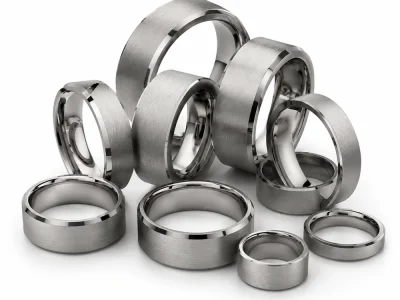
| Carbide rods & blanks | Solid rods, coolant-hole rods, PCB micro-drill rods, plates, discs, sleeve blanks, die blanks, and PDC substrates |
| Custom carbide wear parts | Shaft sleeves, bushings, valve seats, balls, nozzles, seal rings, wear rings, and oil and gas components |
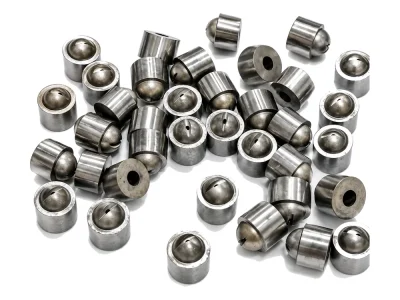
| Mining & construction | Carbide buttons, cylindrical and conical inserts, DTH drill-bit inserts, mining-pick tips, and PDC drill-bit substrates |
| Dies & tooling | Punches, punch pins, cold-heading dies, drawing dies, stamping dies, guide bushings, and die inserts |
06 · How KENIN Qualifies an Equivalent Carbide Grade
Grades from different manufacturers cannot be matched on a simple one-to-one basis. Even when two carbide grades share the same hardness, they may differ in WC grain size, binder composition, porosity, transverse rupture strength, fracture behavior, and actual service life.
8-Step Qualification Process
1. Original review → 2. Operating analysis → 3. Material match → 4. Sample production → 5. Quality inspection → 6. Customer trial → 7. Pilot order → 8. Volume production
Customers can provide the original manufacturer and grade, product drawings, material inspection reports, physical samples or photographs, operating conditions, current service life, and estimated purchasing quantity. Evaluation may cover WC grain size, cobalt- or nickel-based binder, density, hardness, transverse rupture strength, fracture toughness, corrosion resistance, porosity, dimensional accuracy, and surface-finish requirements. For applications involving both abrasion and impact, KENIN may recommend testing a higher-hardness option and a higher-toughness option before confirming the final grade.
07 · FAQ: Tungsten Export Controls and Carbide Sourcing
Why are Japanese carbide manufacturers raising prices in 2026?
Rising tungsten raw-material costs, tighter supply following China’s export controls, plus higher energy, labor, and logistics costs have led manufacturers such as Kyocera and NACHI-FUJIKOSHI to raise prices on carbide inserts, drills, and end mills in 2026.
Did China ban all tungsten exports to Japan?
No. China’s controls require export licensing and end-use review based on product form, specification, end user, and end use. Reported customs data shows a sharp drop in recorded tungsten carbide and tungsten powder exports to Japan, but this is not a blanket prohibition on every civilian product.
What can buyers do to reduce dependence on Japanese carbide suppliers?
Buyers can qualify a secondary supply chain in China, evaluate non-Japanese suppliers in regions such as the US, Europe, Vietnam, or South Korea, increase carbide recycling, and strengthen inventory and contract strategies such as safety stock and rolling forecasts.
How does KENIN Carbide qualify an equivalent carbide grade?
KENIN follows an 8-step process — original product review, operating-condition analysis, material matching, sample production, quality inspection, customer trial, pilot order, and volume production — evaluating grain size, binder composition, density, hardness, toughness, and porosity.
Start Qualifying a Secondary Carbide Supply Chain Today
If you’re looking for an alternative to Mitsubishi Materials, Sumitomo Electric, Kyocera, or another Japanese carbide supplier, send KENIN:
- Original brand and grade
- Product drawing
- Sample or photographs
- Operating conditions and current service life
- Estimated order quantity
- Current pricing or lead-time problem
KENIN will evaluate the feasibility of substitution and provide a material recommendation, sample plan, quotation, and estimated lead time.